A hospital medicine robot has to carry the right item to the right place, then prove that the handoff happened. The supplied material names no robot, hospital, price, deployment count, or test result, so any buying claim would be guesswork.
For a hospital operations manager, that missing detail matters more than a polished demo. A robot may move through a corridor under supervision, yet still fail when a lift is busy, a door is closed, or a nurse needs the medicine before the next round.
Quick read
- Ask for a named hospital site, deployment date, and unit count.
- Test the full route, including lifts, doors, handoffs, and returns.
- Price the staff time around loading, checking, cleaning, and recovery.
The handoff is the real task
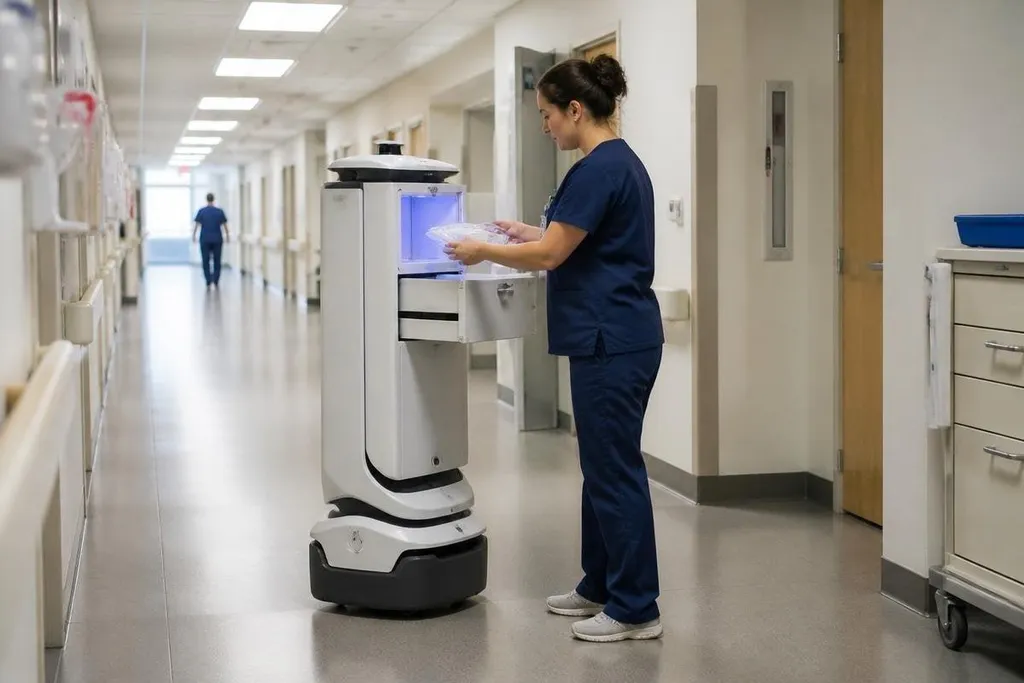
Transport starts when a pharmacy worker loads a sealed order. It ends when an authorised person receives it and the system records the transfer. Every step between those points needs a clear owner.
That chain may include a locked compartment, an identity check, a route through public areas, and a return trip. Wheel movement matters, but the handoff decides if the medicine reaches the ward with the right record attached.
A useful trial should therefore run the whole route. A short corridor demo can show motion control, but it says little about a lift call, a fire door, a crowded waiting area, or a failed delivery attempt.
The hospital should ask for a written task map before a supplier starts a pilot. The map should name the loading point, destination, access rules, person receiving the item, and action taken when the route stops.
What the hospital must measure
A transport robot needs a route plan that staff can check and change. Its sensors may include LiDAR, cameras, or another sensor set to detect people and objects, but the source material gives no model or sensor specification here.
Those details must come from the supplier's documents and the hospital's own test. Measure time at each stage instead of recording one total trip time.
Loading, waiting for access, travel, unloading, and return each create different delays, so a single average can hide the part that needs fixing.
The trial record should also show how often a person takes over. A robot that completes ten quiet trips may still create extra work if staff must guide it around blocked routes or open every door.
Blocked routes and door access belong in the trial record, because they can shift work back to staff. Robot24.com hospital robotics reports can tie those limits to the robot’s task and the extra work people had to do.
For a buyer, the useful record names what happened at the site and who checked the result.
Safety and medicine handling
Medicine transport adds rules that ordinary parcel movement may not. A hospital must check access, temperature needs, packaging, cleaning, spill response, and the record of every person who opens a compartment.
The available material supplies no medicine class, storage range, container type, or hospital policy. Those gaps prevent a claim that one robot can carry every order. A supplier should state the exact items used in the trial and the limits of the compartment.
The robot also needs a safe response when a person blocks its path or a sensor loses a clear view. The test should record the stop, the alert, the time to recover, and the person who decides what happens next.
A buying checklist
Use these questions before signing a pilot or purchase order:
- Route proof: Has the robot completed the full path between pharmacy and ward?
- Access plan: Who opens doors and lifts when automatic access fails?
- Handoff record: How does the receiving worker confirm the order?
- Staff load: How many minutes do loading, checks, cleaning, and recovery add?
- Failure log: What happened during blocked routes, low battery, or sensor faults?
- Price detail: Does the quote include software, site work, support, and replacement parts?
A short trial can answer these questions if the hospital records each trip and keeps the route unchanged long enough to compare results. If the supplier cannot name the site, date, unit count, and measured outcome, ask for those details before treating the robot as ready for hospital work.
I'd wait for that evidence before buying. The next useful number is not a speed claim; it's the share of medicine trips completed without staff intervention and with a verified handoff.